
Calm Classrooms: Why Yoga and Mindfulness are Essential for UK SEN Pupils this September
Jul 12, 2026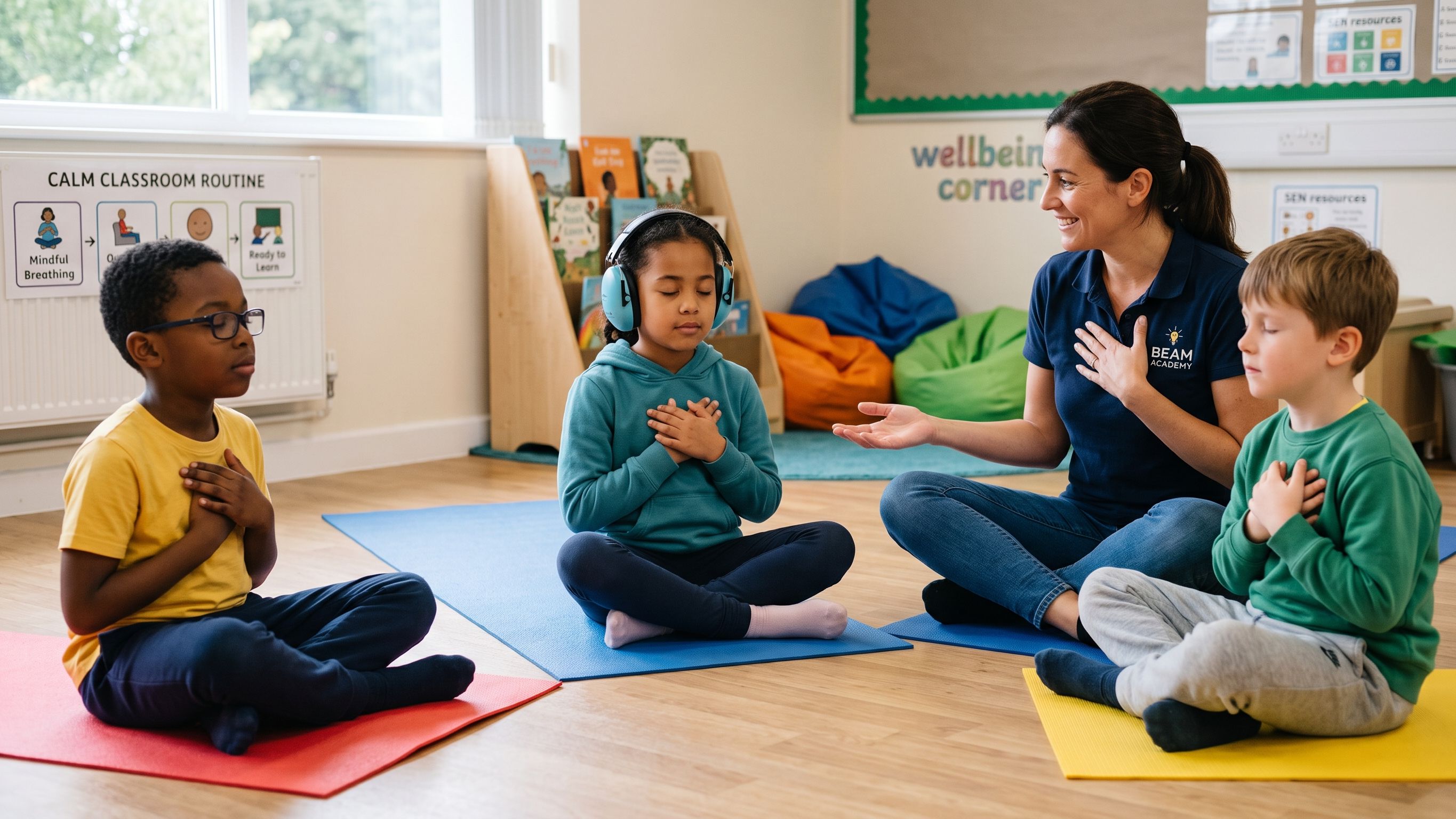
As we look toward the start of the new academic year in September 2026, school leaders and teachers face a changing landscape in pupil needs. Recent figures from the Department for Education reveal that over 1.8 million pupils in England now have special educational needs.
Behind these statistics lie the daily realities of our classrooms. Staff are working harder than ever to support children with autism, ADHD, anxiety, and sensory processing differences. The return to school after the summer holidays brings a major shift in routine that often triggers stress and dysregulation.
To help pupils feel secure and ready to learn, schools need practical, reliable tools. Incorporating regular yoga and mindfulness practices into the school week offers an effective, evidence-based way to help neurodivergent children regulate their nervous systems and access the curriculum.
The Power of Regulation for Neurodivergent Learners
For many pupils with special educational needs, the school environment can feel overwhelming. Bright lights, loud corridors, and unexpected changes to the timetable can easily cause sensory overload. When a child experiences sensory or emotional overload, their brain enters a fight-or-flight state, making focus and learning impossible.
Yoga and mindfulness provide immediate, physical tools to help children navigate these moments. Rather than asking a restless or anxious pupil to simply sit still, these practices combine simple movements with focused breathing. This approach directly signals safety to the brain, lowering the heart rate and reducing anxiety.
Core Benefits for SEN Settings
-
Improved Self-Regulation: Simple breathing techniques help children recognise their internal signals and calm themselves down before a frustration turns into a meltdown.
-
Enhanced Focus: Short, purposeful movement breaks discharge excess physical energy, allowing pupils with ADHD to return to their desks with better concentration.
-
Sensory Awareness: Yoga poses help children develop better spatial awareness and coordination, which supports those with dyspraxia and physical challenges.
-
Inclusion and Belonging: Because yoga is non-competitive and easily adapted, every child can participate successfully alongside their peers.
How to Introduce the Practices in Your Setting
You do not need to clear the hall or change into sports kit to bring these benefits to your pupils. The most successful approaches rely on short, predictable routines built directly into the school day.
Here is a practical sequence that teachers and support staff can use to ease classroom transitions, such as coming back inside after lunch or moving between subjects.
Aligning with Educational Frameworks
Implementing these practices does more than just support individual behavior; it helps schools meet wider inspection and wellbeing standards. The Ofsted Education Inspection Framework places a strong emphasis on Personal Development, specifically looking at how schools build pupil resilience, confidence, and mental health.
Furthermore, social-emotional learning (SEL) strategies are widely recognized by bodies like the Education Endowment Foundation (EEF) as key drivers for improving academic outcomes. When an SEN pupil learns how to manage their anxiety through a simple breathing exercise, they spend less time in distress and more time engaged with their learning.
"We started doing a five-minute chair yoga routine at the start of our afternoon sessions. For our autistic pupils, the predictability of the movement has dramatically reduced transition anxiety. The whole class settles down to work much faster now."
— Sarah, Special School Lead Teacher
Building Staff Confidence for September and Beyond
The key to a successful wellbeing strategy is ensuring that staff feel confident and capable of leading these moments. You do not need to be an expert yogi to introduce these tools to your class. Beam Academy offers accredited training designed specifically for education professionals who want to bring meaningful wellbeing practices into their schools.
Our SEN Yoga and Mindfulness Teacher Training course is created for school teachers, special school staff, and teaching assistants. It delivers practical, child-centered techniques that fit seamlessly into busy school routines, ensuring your setting can support inclusive education from the very start of the new term.
Sign Up For Our Monthly Newsletter
Receive monthly emails with news, blogs and articles about teacher training courses, yoga, mindfulness, education and so much more.
We hate SPAM. You'll only get quality content.
