
Supporting Children with ADHD Through Yoga and Mindfulness
Apr 18, 2026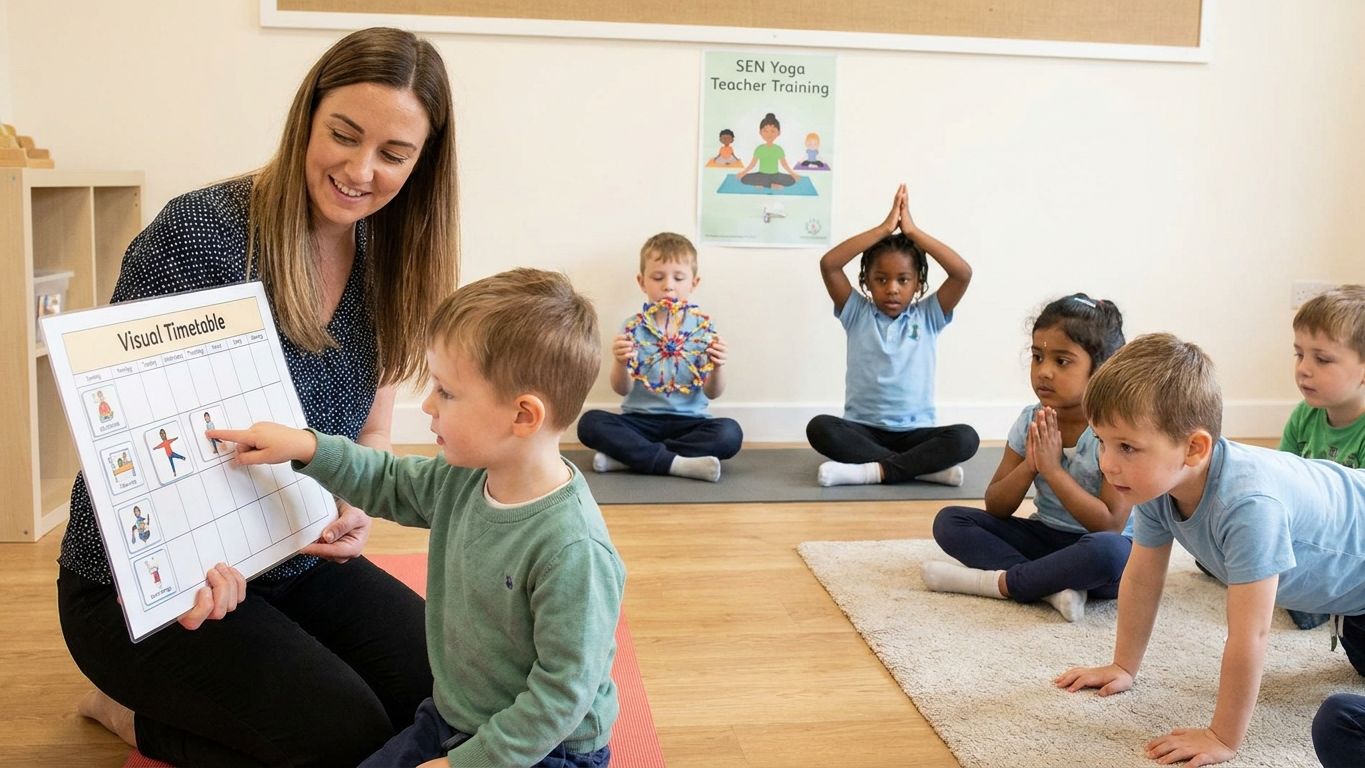
Children with ADHD often face unique challenges in the classroom and at home. They may struggle with impulse control, sustained focus, and physical restlessness. As educators and practitioners, our goal is not to "fix" these traits, but to provide children with a toolkit to help them navigate their world with more ease and confidence.
Yoga and mindfulness are particularly effective for ADHD because they bridge the gap between the body and the mind. They offer a physical outlet for energy while teaching the brain how to pause.
Creating a Supportive Environment
For a child with ADHD, the environment plays a significant role in their ability to engage. When introducing wellbeing practices, consider these adjustments:
-
Clear Structure: Children with ADHD thrive on predictability. Use a visual timetable to show what will happen in the session (e.g., Warm-up, Balancing, Quiet Time).
-
Sensory Awareness: Some children may be over-sensitive to noise or light. Keep the space calm and avoid playing loud music.
-
Inclusive Language: Use positive, direct instructions. Instead of saying "Don't fidget," try "Let’s see if we can keep our feet as still as a mountain."
Practical Tools for Focus and Regulation
The following techniques are designed to support the specific needs of neurodivergent children by grounding their energy and improving self-regulation.
1. Heavy Work and Grounding
Proprioceptive input—activities that put pressure on the muscles and joints—can be very calming for a restless nervous system.
-
The Plank or 'The Crocodile': Holding a pose that requires physical strength helps a child "feel" their body boundaries, which can reduce the need to fidget.
-
Pressed Palms: Have the child press their palms together firmly in front of their chest. This simple "heavy work" task can be done discretely at a desk to help them refocus.
2. Visual Breathing Anchors
Abstract concepts like "breath" can be hard for a child with ADHD to track. Using a visual aid, such as a Hoberman Sphere (a plastic expanding ball), allows the child to synchronise their movement with a physical object.
3. Balance Challenges
Balancing poses, such as Tree Pose, require "quiet" focus. To stay upright, the brain must communicate effectively with the body. This helps strengthen the neural pathways associated with concentration and physical stillness.
The Importance of Training
Working with SEN and neurodivergent children requires a specialized approach. It is essential to understand how trauma, anxiety, and ADHD affect the developing brain so that we can adapt our teaching safely and effectively.
Our SEN Yoga Teacher Training is specifically designed for teachers, TAs, and healthcare professionals. This course provides:
-
Practical adaptations for ADHD and Autism.
-
Strategies for managing challenging behaviour with empathy.
-
Tools to build resilience and self-esteem in children who may feel "different" from their peers.
By integrating these tools into your setting, you create a space where every child - regardless of how their brain is wired—feels capable of finding their own version of calm.
Sign Up For Our Monthly Newsletter
Receive monthly emails with news, blogs and articles about teacher training courses, yoga, mindfulness, education and so much more.
We hate SPAM. You'll only get quality content.
