
THE £24BN ABSENCE SPIRAL: The Unexpected Strategy Primary Headteachers Are Using to Fix Attendance Before Lunchtime
Aug 07, 2026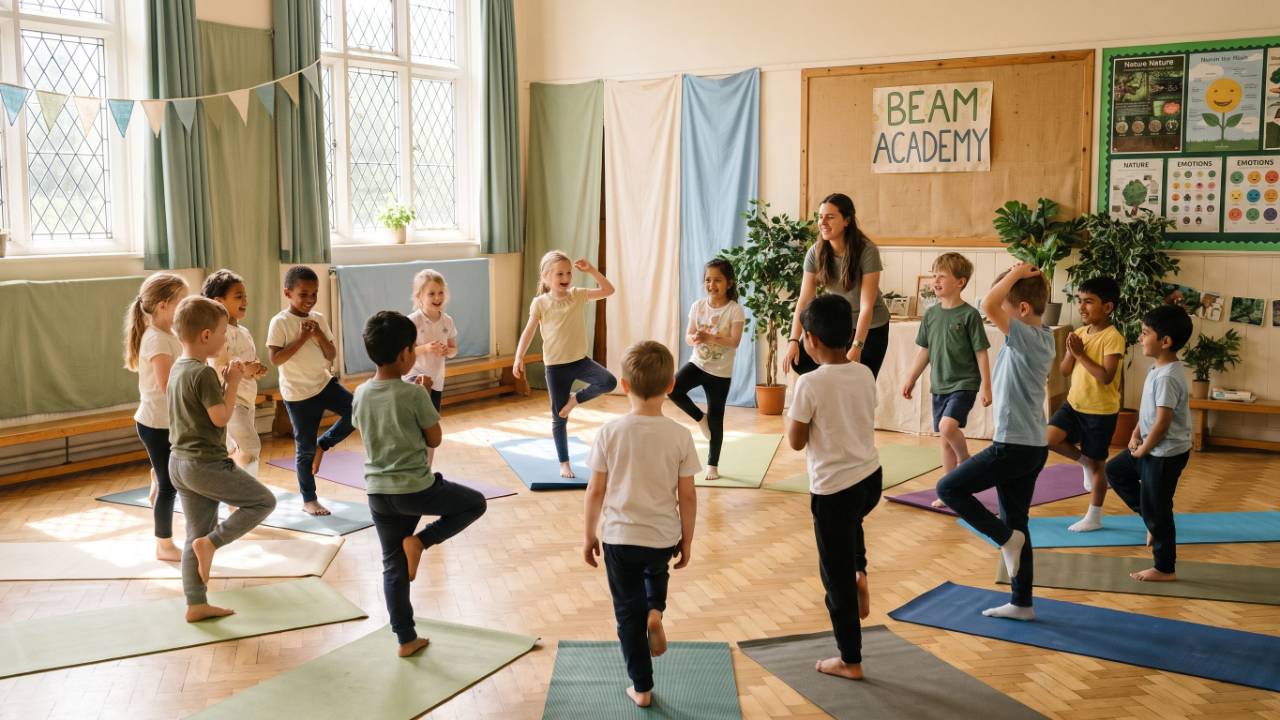
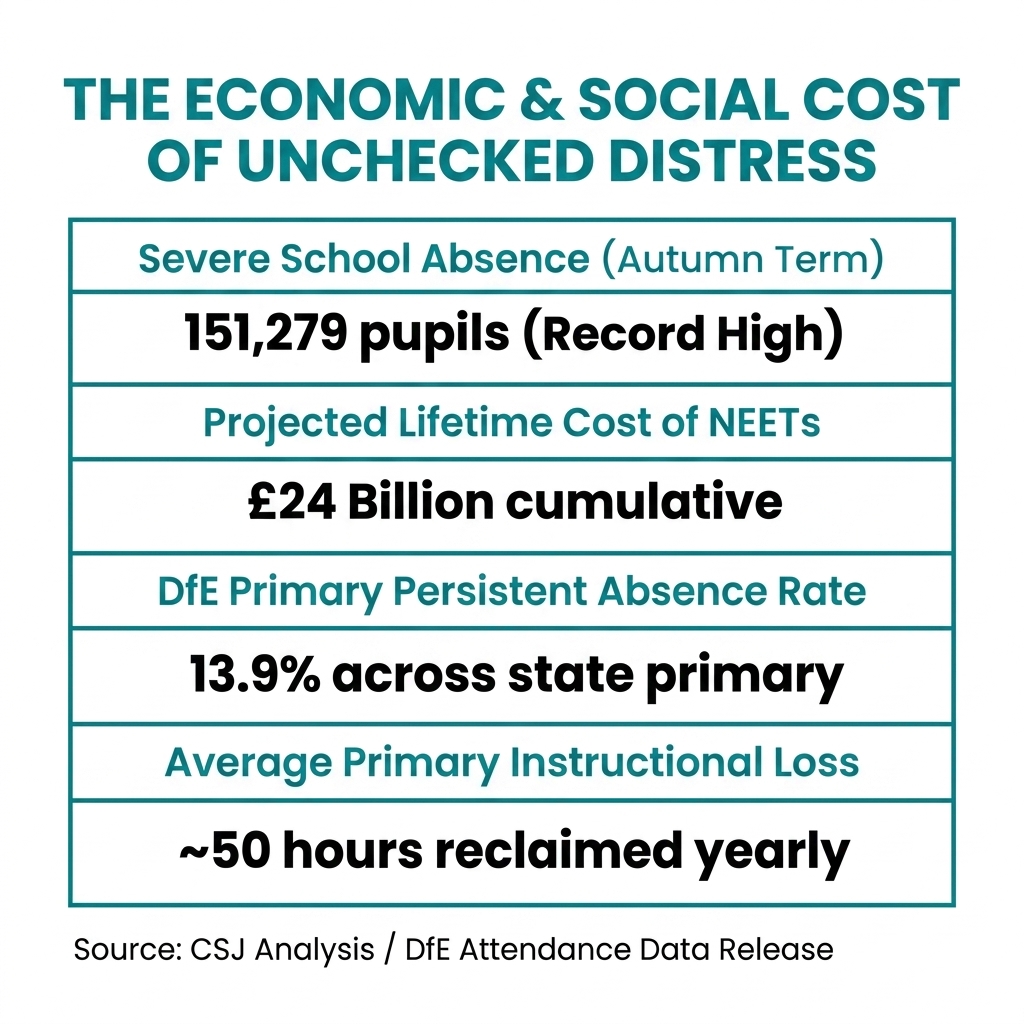
When the Department for Education (DfE) and the Centre for Social Justice (CSJ) released their latest metrics, the message sent to primary school leadership teams was impossible to ignore. Persistent absence is no longer an isolated pastoral issue; it has become a multi-billion-pound structural crisis holding the entire UK economy back.
According to CSJ analysis, a record 151,279 pupils were severely absent in the autumn term, representing a staggering 195 per cent increase since 2018/19.
At the same time, the government's Milburn Review into youth worklessness recommends that primary schools be required to flag children at risk of long-term disengagement before they leave Year 6.
The central question for leadership is simple: How can primary settings resolve emotional distress and absence when both time and funding are exhausted?
The ROI of Early Prevention: Moving Beyond 'Crisis Management'
Historically, school wellbeing spending has suffered from "reactive expenditure", which means funding 1-to-1 support workers, external referrals, or emergency interventions only after a child reaches crisis point.
However, under updated DfE statutory guidance (Working Together to Improve School Attendance), ministers have explicitly noted that "absence is a symptom" of wider distress, expecting schools to build calm, supportive environments rather than defaulting to punitive measures.
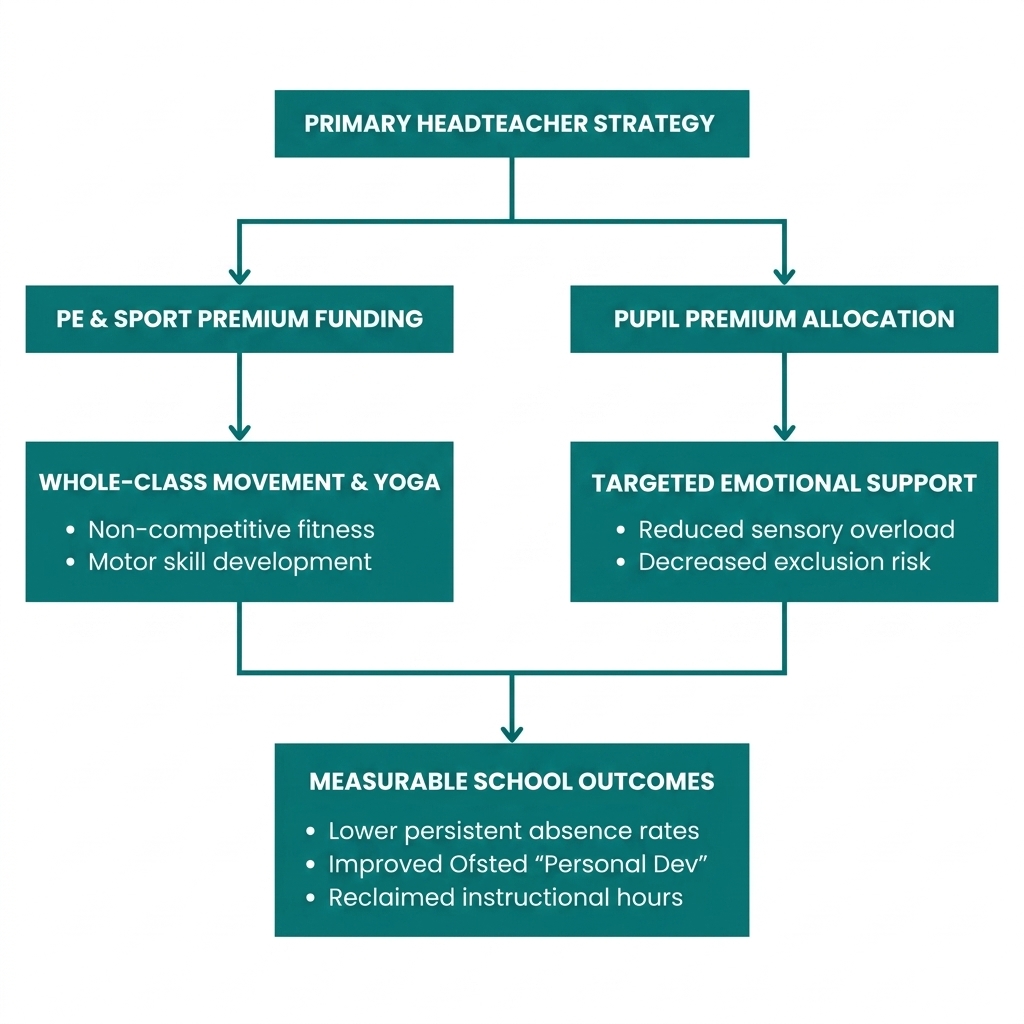
Leading primary headteachers are deploying capital into upstream prevention. Independent evaluations from the Centre for Mental Health show that universal emotional regulation programmes deliver up to a 4:1 return on investment by lowering classroom disruptions, reducing suspensions, and halting the escalation into severe absence.
To achieve these outcomes, primary schools and early years settings are partnering with specialist providers like
Physical and Emotional Regulation: The Neurological Link to Learning
Why are primary leadership teams prioritizing structured physical regulation over unstructured play? The answer rests in cognitive development and physiological self-regulation.
Children aged 3 to 11 experience emotional distress through bodily sensations, such as shallow breathing, muscle rigidity, internal restlessness, and sensory overload. Expecting a child stuck in a state of nervous system arousal ("fight or flight") to focus on phonics or Key Stage 2 reasoning is biologically unrealistic.
Interventions provided by BEAM ACADEMY target the autonomic nervous system through inclusive movement, diaphragmatic breathwork, and sensory grounding:
-
Diaphragmatic Breathwork: Stimulates the vagus nerve, reducing elevated heart rates and lowering stress markers before core academic tasks.
-
Proprioceptive Yoga Poses: Offer deep muscular input, helping neurodivergent pupils and those with SEND feel secure and settled in the classroom.
-
Structured Mindfulness Practices: Strengthen prefrontal cortex functioning, building impulse control, working memory, and emotional resilience.
Headteachers report that allocating 20 to 30 minutes a week to expert-led yoga and movement reduces lesson transition friction, saving up to 15 minutes of instructional time per day. Over a standard 39-week school year, that gives back nearly 50 hours of learning time per class.
Auditing the Impact: How Headteachers Are Funding Whole-School Wellbeing
With Ofsted inspectors closely examining personal development, physical health, and early intervention strategies, headteachers must ensure all PE and Sport Premium and Pupil Premium expenditure yields verifiable results.
BEAM ACADEMY provides primary schools and nurseries with a complete framework that matches these expectations:
-
Direct Class Delivery: Specialist, enhanced DBS-checked instructors deliver weekly sessions tailored from EYFS through to Year 6.
-
Staff Training & CPD: Accredited training courses equip teachers and TAs with practical, sustainable techniques to maintain calm learning environments every day.
-
SEND & Early Years Inclusivity: Non-competitive yoga and movement allow every pupil, including those with ASC or ADHD, to participate fully without fear of failure.
Real-World Feedback from School Leaders
Headteachers and nursery managers across the country report distinct improvements in school culture and classroom readiness:
"The children thoroughly enjoy the sessions and often ask for more! The instructor clearly understands the abilities of individual children and caters to each wonderfully. I would 100% recommend this for any school setting."
Eve Thurkle, School & Early Years Manager
"We have been using BEAM ACADEMY for years... The pupils look forward to their weekly yoga and mindfulness classes, and I've noticed a genuine difference in their calm approach to learning."
Primary School Pastoral Lead
The Bottom Line for Primary Leadership
As primary schools and early years providers prepare their strategic budgets, school leaders face a clear choice: absorb the growing costs of emotional avoidance, behavioral disruptions, and persistent absence, or put a proactive, evidence-led solution in place.
Integrating structured yoga, movement, and emotional regulation into early years and primary settings is no longer a peripheral consideration. It is a high-yield operational investment that stabilizes classrooms, supports teaching staff, and protects pupil attainment.
Take Action for Your Setting
Equip your school or nursery with evidence-based, accredited physical and emotional wellbeing programmes.
-
Book Direct Classes: Bring a specialist BEAM ACADEMY instructor into your school weekly.
-
Up-Skill Your Team: Explore accredited CPD courses in Children's Yoga, Mindfulness, and Early Years Wellbeing.
👉 Visit
Sign Up For Our Monthly Newsletter
Receive monthly emails with news, blogs and articles about teacher training courses, yoga, mindfulness, education and so much more.
We hate SPAM. You'll only get quality content.
