
THE SEPTEMBER RESET: The Simple Five-Minute Routine Helping Primary Schools Settle Back-to-School Anxiety
Sep 06, 2026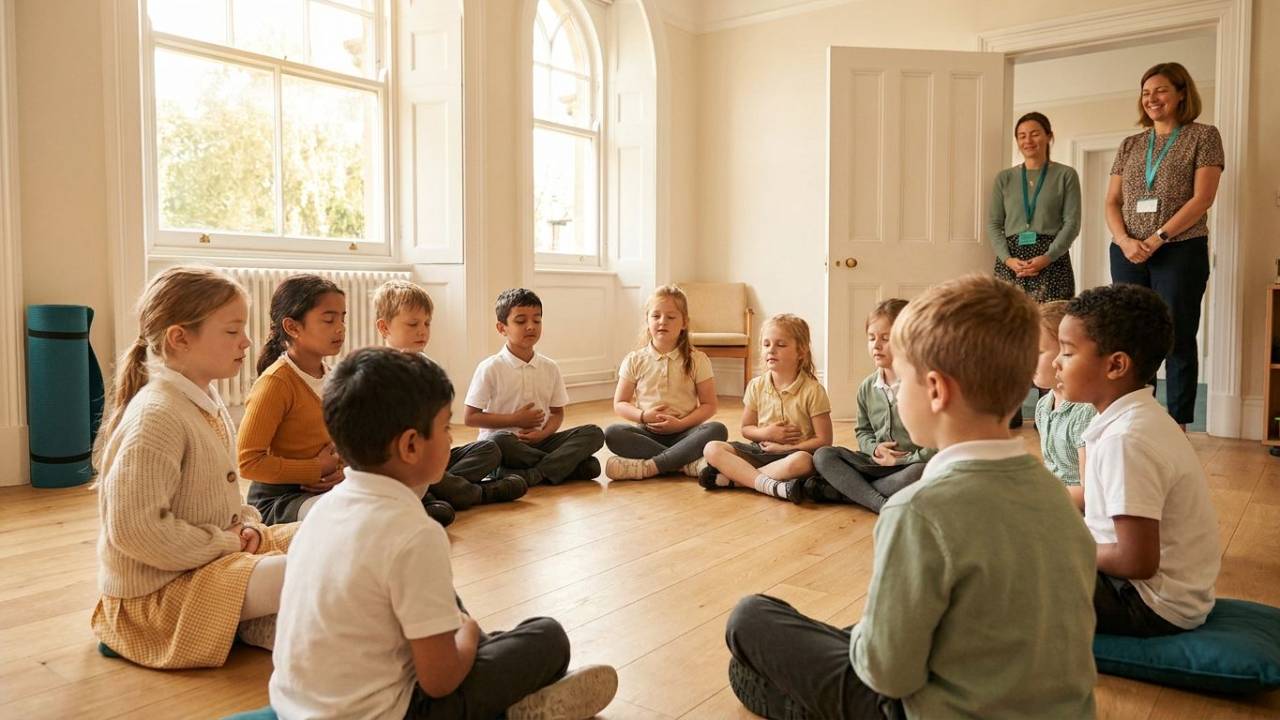
Every September, educational leadership teams across the UK prepare for the annual return to school. While administrative preparation focuses on stationery lists, uniform compliance, and timetable scheduling, the real frontline challenge unfolds on the carpet and at the school gates.
For thousands of children and teenagers, swapping the unstructured rhythm of the summer holidays for bright fluorescent lights, echoing corridors, and crowded dining halls triggers acute sensory and emotional overload.
Under the Department for Education’s updated statutory attendance framework, the stakes for primary leaders could not be higher. The guidance explicitly confirms that "absence is almost always a symptom of wider circumstances", mandating that schools build calm, supportive environments and explore reasonable adjustments for pupils experiencing mental ill-health before escalating enforcement.
The primary leadership dilemma is straightforward: How can schools de-escalate back-to-school anxiety and prevent persistent absence without diverting essential teaching capacity?
The Biology of the Autumn Transition: Why Words Alone Fail
When a young person experiences school transition anxiety, the body reacts long before the rational mind can process the change .
Separation anxiety, social nerves, and academic apprehension activate the autonomic nervous system into a fight, flight, or freeze state:
-
Sympathetic Arousal: Heart rates spike, breathing becomes shallow, and cortisol floods the bloodstream, manifesting physically as headaches, nausea, or abdominal aches before morning registration.
-
Prefrontal Cortex Deactivation: In an overstimulated state, a child's brain temporarily dampens executive function, making verbal reassurance ("You will be fine") biologically ineffective.
-
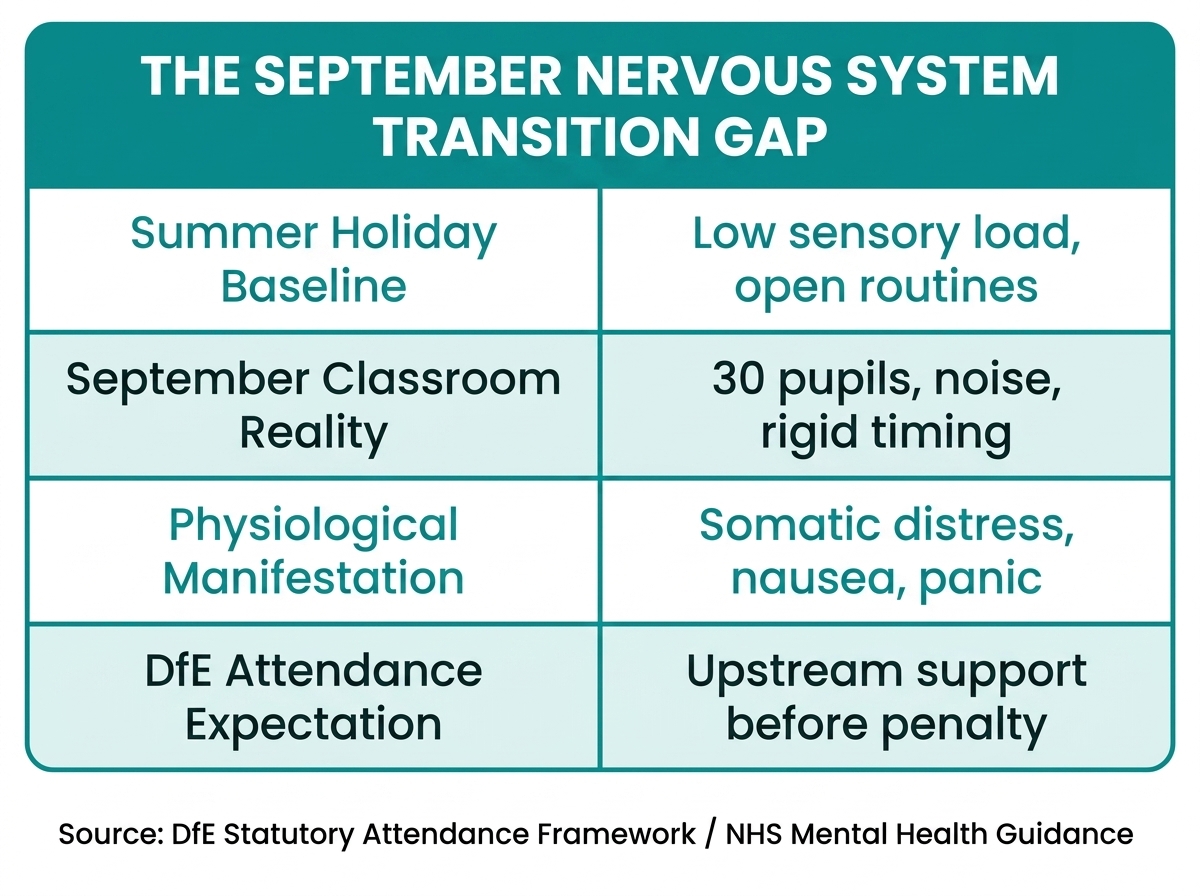
To bridge this gap, primary headteachers and nursery managers are moving away from purely conversational pastoral care toward somatic self-regulation . Partnering with specialist providers like
Three Evidence-Based Somatic Tools for September Calm
BEAM ACADEMY programmes deliver practical, child-centred techniques that can be embedded into the school day to settle autumn nerves :
-
Diaphragmatic Belly Breathing: Encouraging pupils to place their hands on their abdomen and take slow, rhythmic breaths activates the vagus nerve, lowering elevated heart rates and switching off autonomic panic responses before the morning register .
-
Proprioceptive Postural Anchoring: Grounded yoga poses, such as seated forward folds or simple tree poses, provide deep joint and muscle feedback, helping pupils feel physically rooted and secure within the classroom environment .
-
Transition Sensory Resets: Introducing a two-minute mindful pause following playground breaks or lunchtime transitions eliminates cognitive friction, saving up to 15 minutes of lost teaching time per classroom every day .
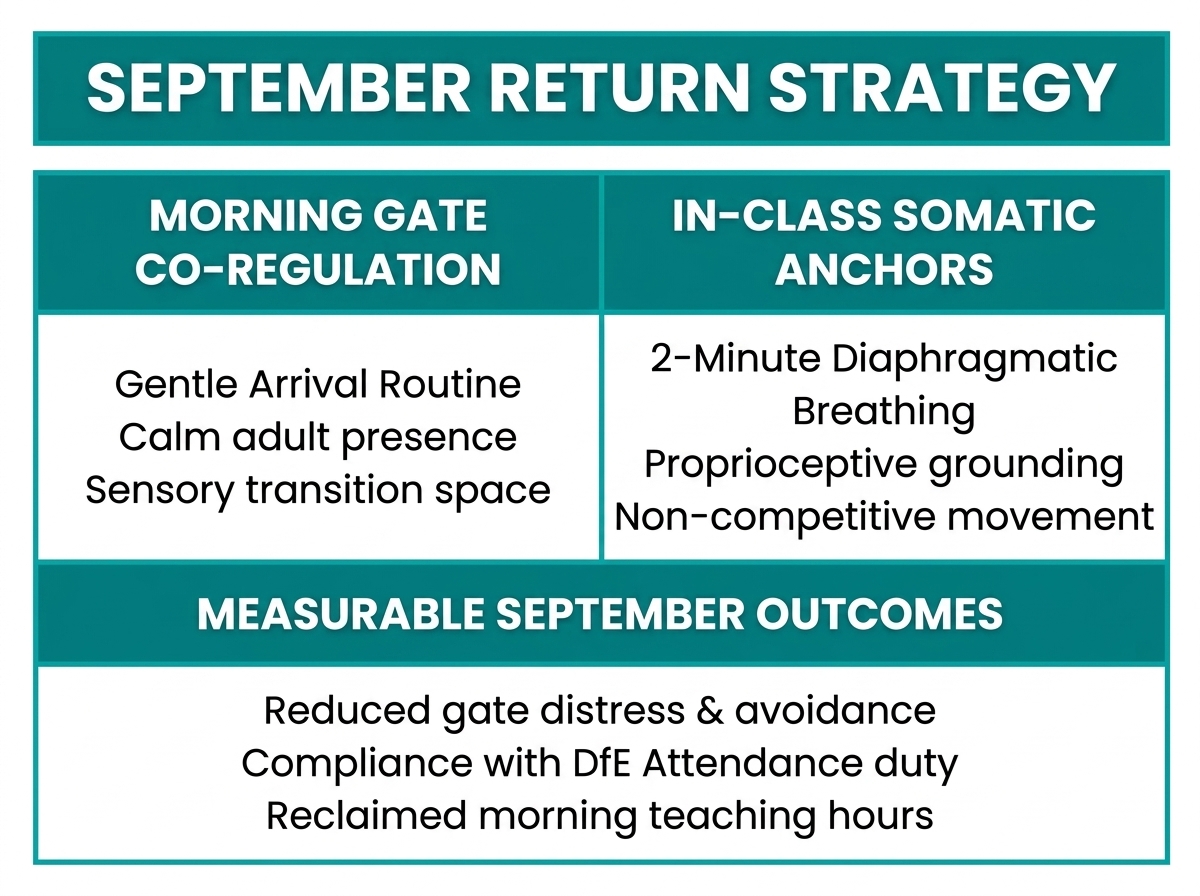
Sustainable Implementation: Premium Funding & Auditable Impact
Meeting the emotional needs of pupils in September does not require unbudgeted capital expenditure.
Headteachers can strategically deploy existing, ring-fenced budgets to establish sustainable wellbeing structures:
-
PE and Sport Premium: Fully fund weekly, specialist-led yoga and movement sessions that improve physical balance, core stability, and non-competitive health across EYFS, Key Stage 1, and Key Stage 2 .
-
Pupil Premium Allocations: Target emotional self-regulation support for vulnerable and disadvantaged pupils, delivering auditable evidence of early pastoral intervention.
-
Accredited Staff CPD: BEAM ACADEMY provides training courses designed by teachers, for teachers, up-skilling classroom educators and TAs to deliver calming breathwork and grounding techniques independently throughout the year.
Feedback from Educational Leaders
School managers and pastoral leads report that weekly somatic provision creates sustained improvements in pupil focus and emotional resilience:
"The children thoroughly enjoy the sessions and often ask for more! The instructor clearly understands the abilities of individual children and caters to each wonderfully. I would 100% recommend this for any early years setting or school."
Eve Thurkle, School & Early Years Manager
"The pupils look forward to their weekly yoga and mindfulness classes. I've noticed a genuine difference in their calm approach to learning and their mental health."
Primary School Pastoral Lead
The Leadership Verdict
As the autumn term gathers momentum, schools cannot afford to let unresolved transition anxiety develop into persistent autumn absence.
Embedding structured yoga, breathwork, and emotional regulation across primary and early years settings provides an evidence-based foundation that stabilises classrooms, safeguards teacher wellbeing, and ensures every young person feels secure enough to learn.
Take Action for Your School
Support your pupils' physical and emotional transition this September with accredited wellbeing programmes.
-
Book Weekly School Sessions: Bring an enhanced DBS-checked, specialist BEAM ACADEMY instructor into your school or nursery.
-
Up-Skill Your Staff Team: Explore accredited teacher training courses in Children's Yoga, Mindfulness, and SEN Wellbeing.
👉 Visit
Sign Up For Our Monthly Newsletter
Receive monthly emails with news, blogs and articles about teacher training courses, yoga, mindfulness, education and so much more.
We hate SPAM. You'll only get quality content.
