
THE SUPPLY TEACHER DRAIN: The Counter-Intuitive Way Primary Leaders Are Protecting Staff Retention and Budgets
Aug 24, 2026
By the BEAM ACADEMY team
Primary school headteachers returning to their budgets this term face a stark financial drain: the mounting cost of staff absence and short-term supply cover .
According to data from the Teacher Wellbeing Index, 2.5 million working days are lost to mental ill-health in education annually, making the sector one of the hardest-hit in the UK economy. Over 86 per cent of senior leaders report high levels of workplace stress, while more than a third of education professionals exhibit clinical symptoms of chronic exhaustion and anxiety.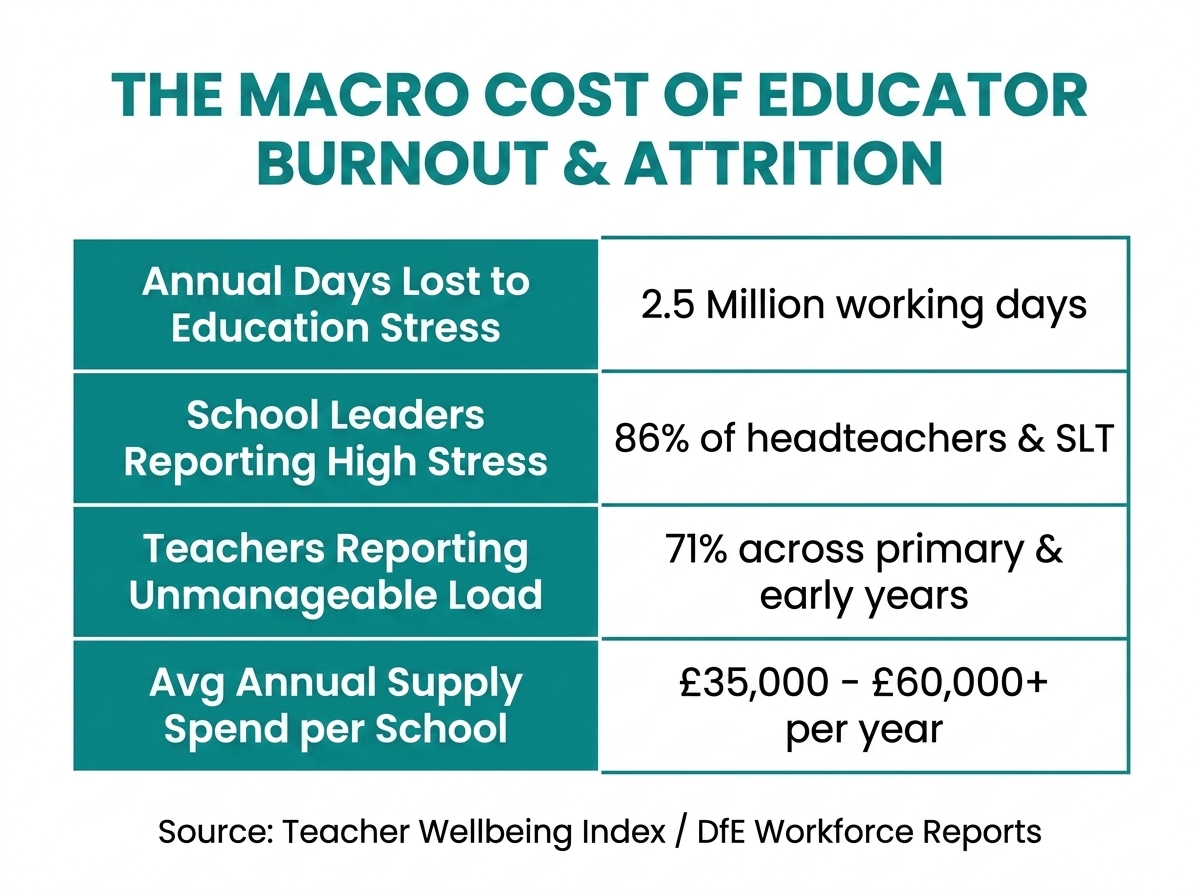
While policy discussions typically focus on marking loads and administrative tasks, frontline primary and early years practitioners point to a deeper daily drain: the exhaustion of managing persistent emotional dysregulation in the classroom .
When multiple pupils in Key Stage 1 or 2 exhibit sensory overload, emotional avoidance, or behavioral disruption, classroom teachers must continuously expend internal emotional energy to maintain calm . Without structured somatic tools, this cycle of reactive behaviour management leads directly to teacher burnout and mid-year resignations.
The central leadership question is clear: How can primary headteachers protect staff retention and reduce supply costs without adding new workload onto existing staff?
The Science of Co-Regulation: Why Stressed Adults Cannot Settle Dysregulated Children
Developmental neuroscience demonstrates that emotional regulation is fundamentally relational . A child’s autonomic nervous system mirrors the physiological state of the adults around them:
-
Autonomic Mirroring: When a teacher is stressed, their elevated vocal pitch, shallow breathing, and tense posture signal danger to pupils' nervous systems, inadvertently increasing classroom agitation.
-
The "Fight or Flight" Cascade: Dysregulated pupils pull teachers into a state of sympathetic nervous system arousal, making standard verbal discipline ineffective and exhausting.
-
The Co-Regulation Anchor: A grounded, regulated educator using intentional diaphragmatic breathing and calm body language actively triggers the parasympathetic nervous systems of pupils, restoring focus across the room .
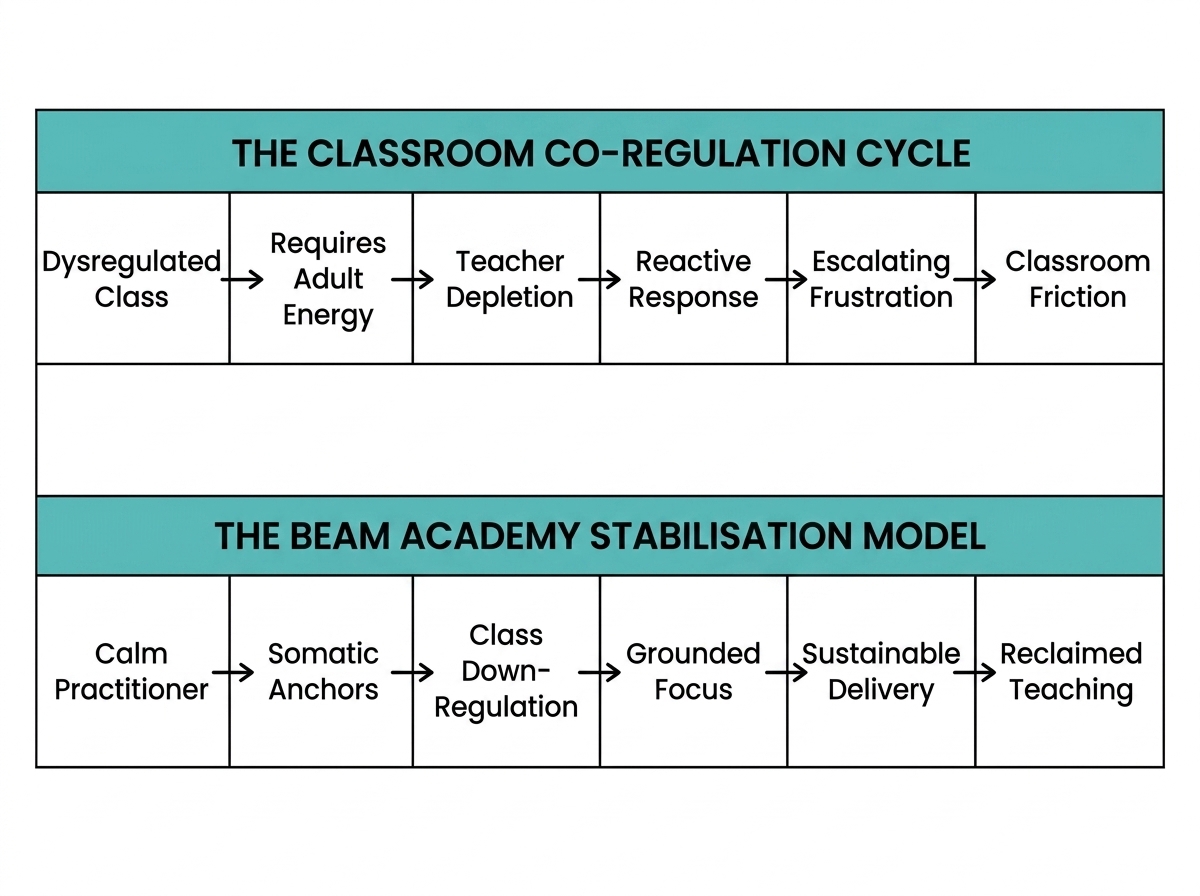
Rather than expecting teachers to improvise de-escalation strategies during moments of crisis, progressive primary schools partner with
The Triple Financial Benefit: How Somatic Provision Pays for Itself
Investing in accredited whole-school wellbeing frameworks provides a clear return across three budget lines:
-
Slashed Supply and Agency Outlays: By reducing the primary driver of teacher stress (constant behavioural crisis management), schools reduce short-term sick leave, preserving vital operational budgets.
-
Effective Use of Ring-Fenced Funds: Headteachers can allocate PE and Sport Premium to fund specialist weekly classes and use professional development budgets for accredited staff training .
-
Reclaimed Instructional Time: Streamlining lesson transitions through quick, 2-minute breath and movement anchors returns up to 50 hours of teaching time per classroom each academic year.
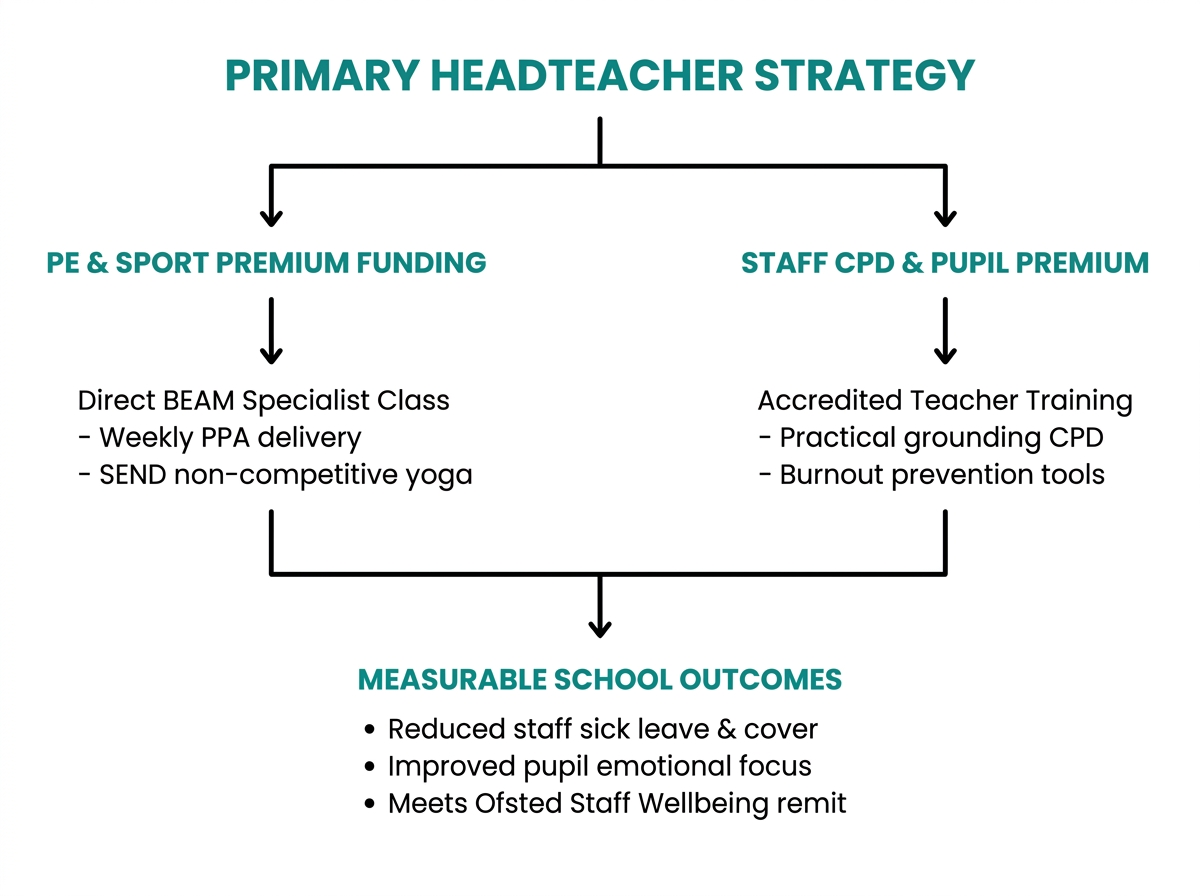
Upskilling the Workforce: Teacher Training Designed by Teachers
A key differentiator of the BEAM ACADEMY model is that its training courses are designed by teachers, for teachers .
Classroom teachers and support staff are not asked to complete theoretical modules . Instead, BEAM ACADEMY equips educators with direct, practical techniques:
-
Sensory Grounding Exercises: Practical strategies to settle over-stimulated pupils after break time without shouting or conflict .
-
Breathwork for Focus: Accessible techniques (such as Deep Belly Breathing and Bunny Breath) that give children immediate tools to self-soothe before assessments or reading tasks .
-
Trauma-Informed Classroom Boundaries: Clear frameworks to establish physical and emotional safety for all pupils, including those with Autism Spectrum Condition (ASC) and ADHD .
Real-World Feedback from Educational Leaders
Nursery and primary school leaders highlight how external specialist provision transforms both pupil behaviour and staff morale :
"The classes teach valuable life skills like mindfulness, breathing techniques, and emotional regulation that benefit the children well beyond their time here... The teachers bring warmth, patience, and genuine enthusiasm to every class."
Norbury Hill Cubs Nursery Leadership
"Our BEAM teacher keeps the children fully engaged and gently encourages them all to make the yoga moves alongside the story. All of the team and children really look forward to her sessions."
Denis O'Sullivan, Educational Setting Leader
The Leadership Verdict
In an educational landscape marked by tight budgets and staffing pressures, primary headteachers cannot afford to treat teacher wellbeing and pupil behaviour as separate issues .
Embedding structured somatic yoga, movement, and mindfulness across early years and primary schools stabilizes classrooms, protects teaching teams, and ensures that public funding creates sustainable, positive school cultures .
Take Action for Your School
Protect your staff team and enhance pupil wellbeing with accredited, specialist programmes .
-
Book Weekly School or Nursery Classes: Bring an enhanced DBS-checked BEAM ACADEMY instructor into your setting .
-
Up-Skill Your Team with Accredited CPD: Explore hybrid and online Teacher Training courses in Early Years Yoga, Children's Yoga, and SEN Wellbeing .
👉 Visit
Sign Up For Our Monthly Newsletter
Receive monthly emails with news, blogs and articles about teacher training courses, yoga, mindfulness, education and so much more.
We hate SPAM. You'll only get quality content.
