
Navigating the Digital Balance: Managing Screen Time in the Early Years
May 31, 2026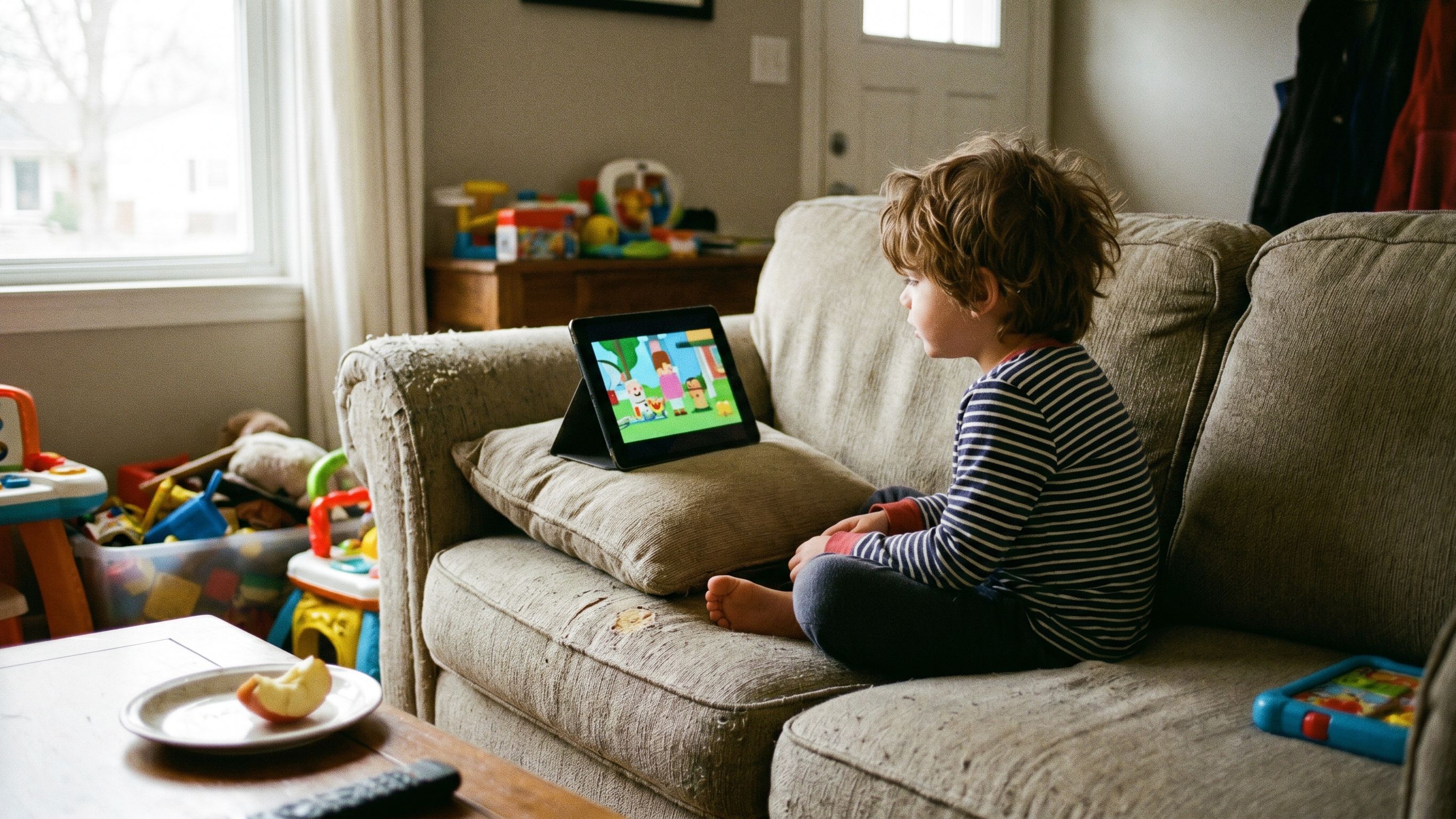
A top concern for parents with young children today is managing screen time and its impact on early development.
With screens present in almost every home, a massive 98% of two-year-olds watch screens daily.
This issue matters now because 90% of a child’s brain development happens before the age of five.
The Real-World Impact on Development
For nursery managers, school teachers, and healthcare professionals, the daily effects of excessive screen use are clear. When digital devices replace active play and human interaction, children often show difficulties in several core areas:
-
Emotional Regulation: Receptive watching can delay a child's ability to self-soothe, leading to more frequent meltdowns.
-
Physical Tracking and Motor Skills: Spending long periods sitting and looking at a flat screen reduces the time children spend moving, climbing, and developing spatial awareness.
-
Focus and Attention: Fast-paced, short-form digital content can overstimulate young brains, making it harder for children to focus on slower, real-life classroom activities.
"Many children now arrive at nursery struggling to communicate or settle into physical play. They are used to the instant gratification of a tablet screen." — Early Years Practitioner, Bristol
Practical Guidance for Settings and Families
The Department for Education recommends that children aged two to five should have no more than one hour of screen time per day.
To help families and educators replace screen time with healthy alternatives, consider these simple, evidence-based swaps:
| Screen-Based Activity | Healthy, Real-World Swap | Developmental Benefit |
| Watching a fast-paced video before bed | Reading a physical book or practicing a gentle breathing stretch | Implements a calm routine and improves sleep quality. |
| Using a phone or tablet during mealtimes | Having a conversation or playing a simple sorting game | Builds language skills and strengthens social bonding. |
| Passive digital entertainment while busy | Mindful movement, such as imitating animal shapes and yoga poses | Enhances physical coordination, spatial awareness, and body focus. |
Introducing playful, active movement helps young children reconnect with their physical bodies. Simple practices like learning to balance on one foot or taking deep, slow breaths give children the tools they need to regulate their own emotions and build resilience.
Next Steps and Professional Training
As professionals working in nurseries and schools, you are perfectly placed to guide parents through these modern challenges. Building your own skills in child-centred wellbeing allows you to bring calm, focus, and physical confidence back into your setting.
If you would like to learn how to deliver playful, age-appropriate wellbeing sessions that support healthy development, consider exploring specialist training. Our Early Years Yoga teacher training course is designed specifically for nursery staff, teachers, and wellbeing practitioners. It provides practical, non-judgmental tools to help children aged 2 to 5 thrive in a digital world.
Sign Up For Our Monthly Newsletter
Receive monthly emails with news, blogs and articles about teacher training courses, yoga, mindfulness, education and so much more.
We hate SPAM. You'll only get quality content.
